Groove-Based 3D Printed Prosthetic Hand
Master's Thesis · Penn State Mechanical Engineering · 2025
Overview
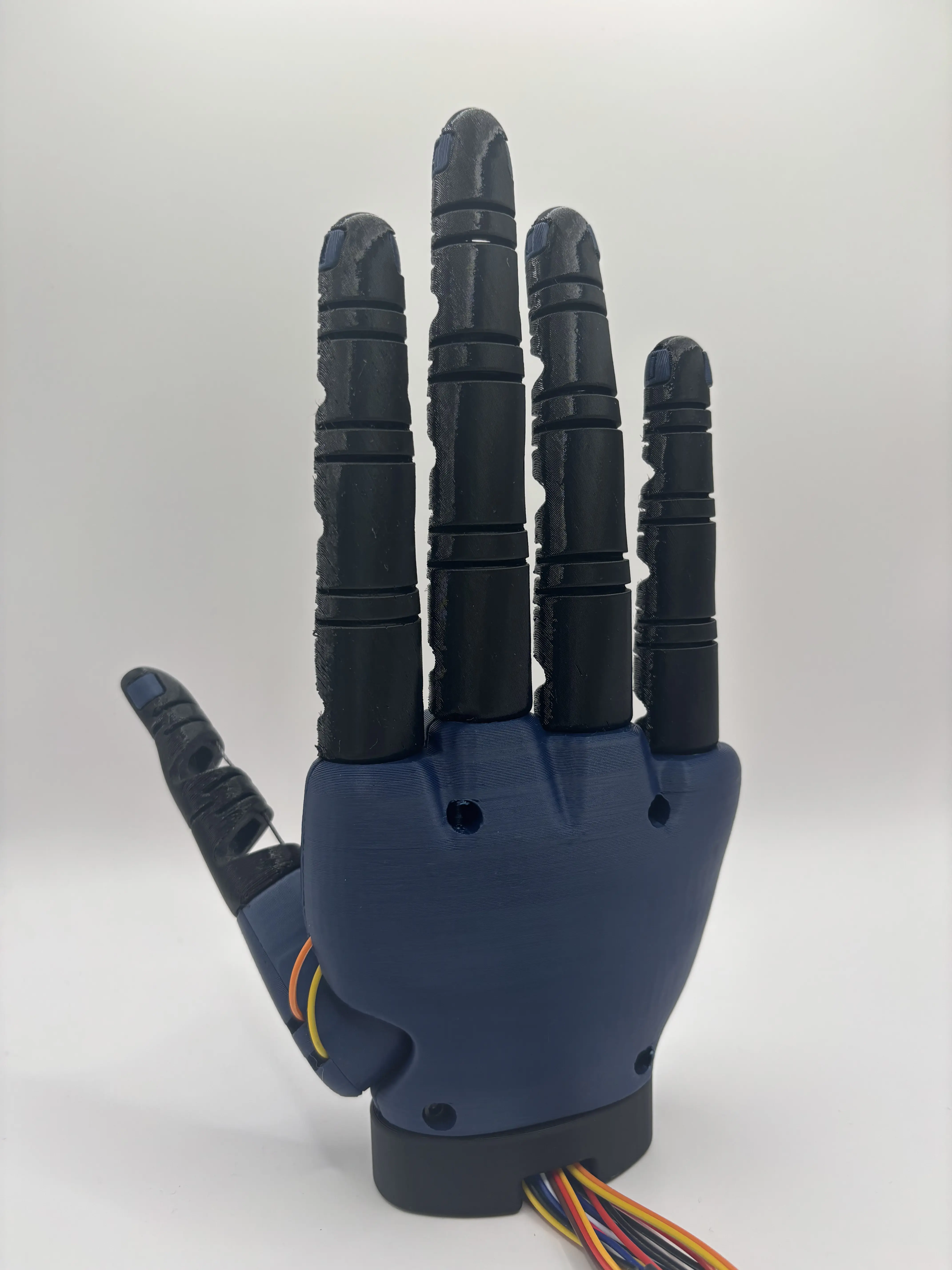
This project designed and fabricated a fully functional prosthetic hand using TPU-based 3D printing and soft robotic principles. The core contribution is a novel groove pattern along each phalange that reduces stress concentration, improves joint flexibility, and extends fatigue life — all without compromising grip strength. The design was validated through finite element analysis, physical fatigue testing, fingertip force benchmarking, and real-world grasping trials.
- Designed a novel groove-based TPU finger to reduce stress concentration and improve bending durability vs. conventional tendon-driven designs.
- Ran ANSYS parameter sensitivity studies (FEA) across groove height, thickness, and spacing — validated with response surface method statistical analysis.
- Built a custom cyclic test bench with servo motor, tendon routing system, and load cell to run 250,000-cycle fatigue and force output experiments.
- Integrated six DC motors, a servo-driven thumb, and Arduino-based control into a compact palm housing designed from 3D hand scans.
- Demonstrated power and precision grasps across rigid, soft, and irregular objects using the fully assembled hand.
Design process
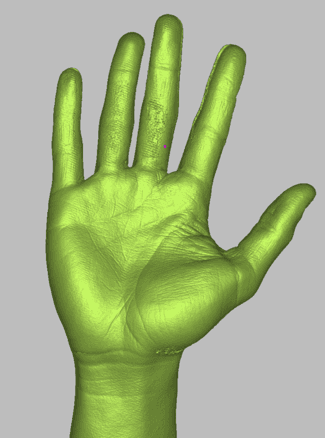
Artec Space Spider 3D scan — used as anatomical reference for finger and palm geometry
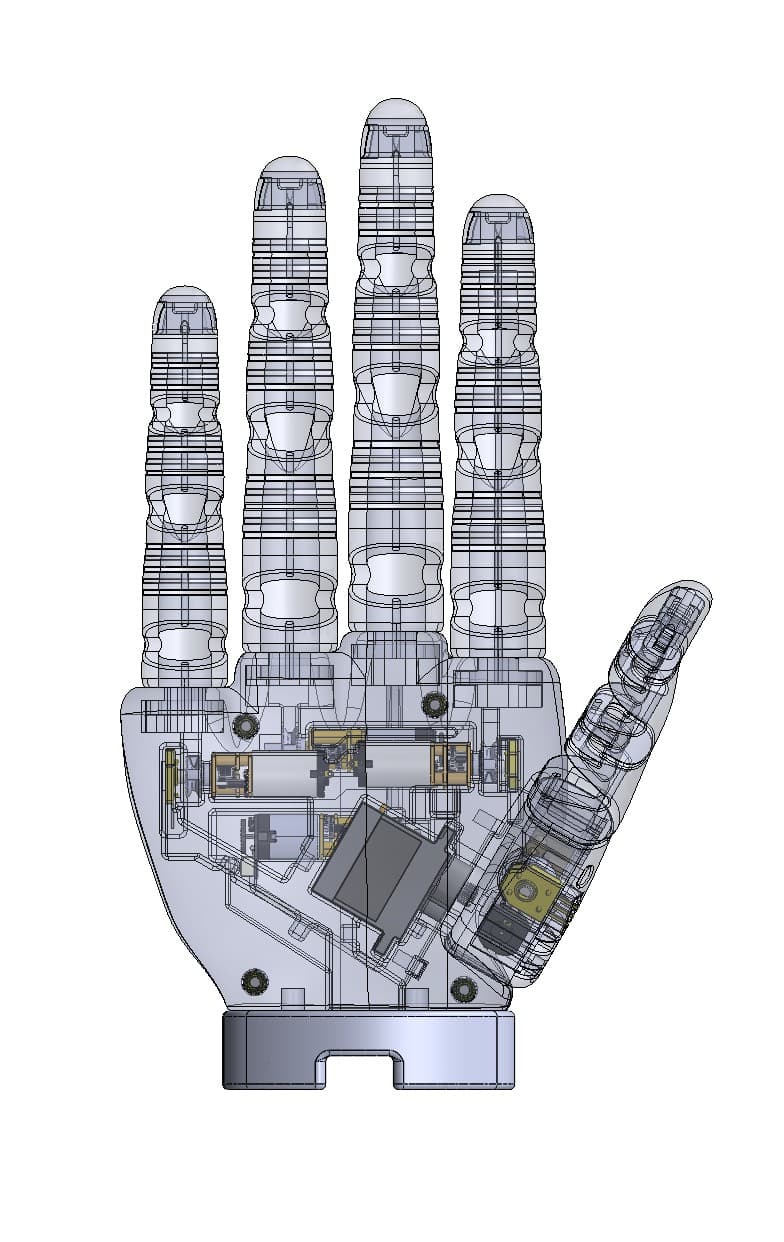
SolidWorks exploded assembly — finger, palm, and motor housing components
Research data
ANSYS finite element analysis comparing Von Mises stress between the grooved and non-grooved finger designs under identical 20 mm tendon displacement loading. The groove pattern reduces peak stress by more than 50%, directly extending fatigue life.
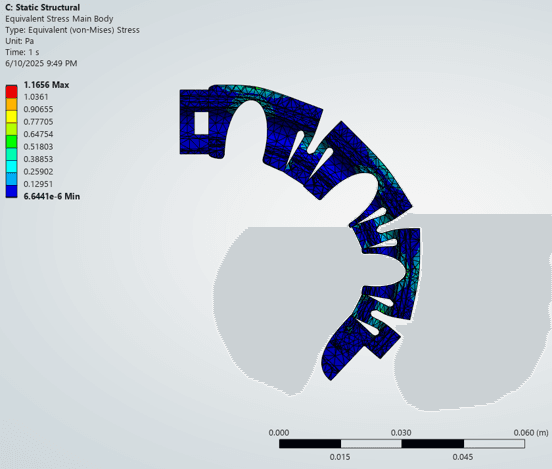
Grooved finger — max stress 1.656 Pa
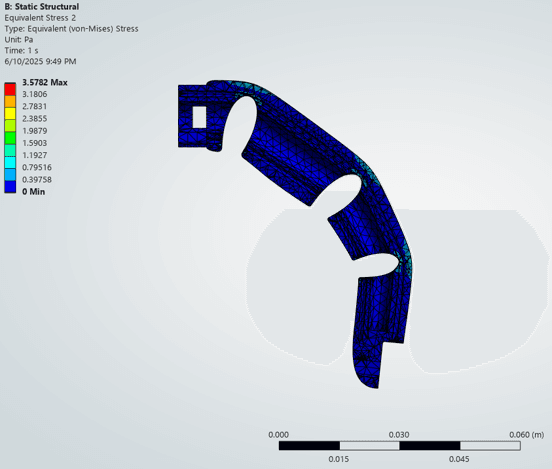
Non-grooved finger — max stress 3.578 Pa
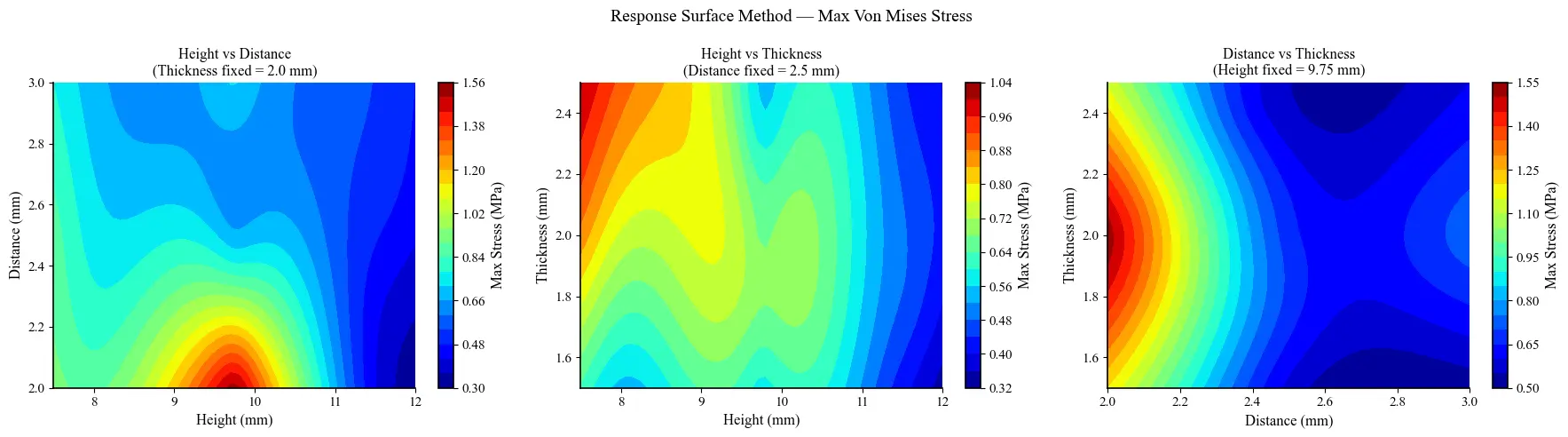
Von Mises stress — groove geometry FEA optimization (RSM)
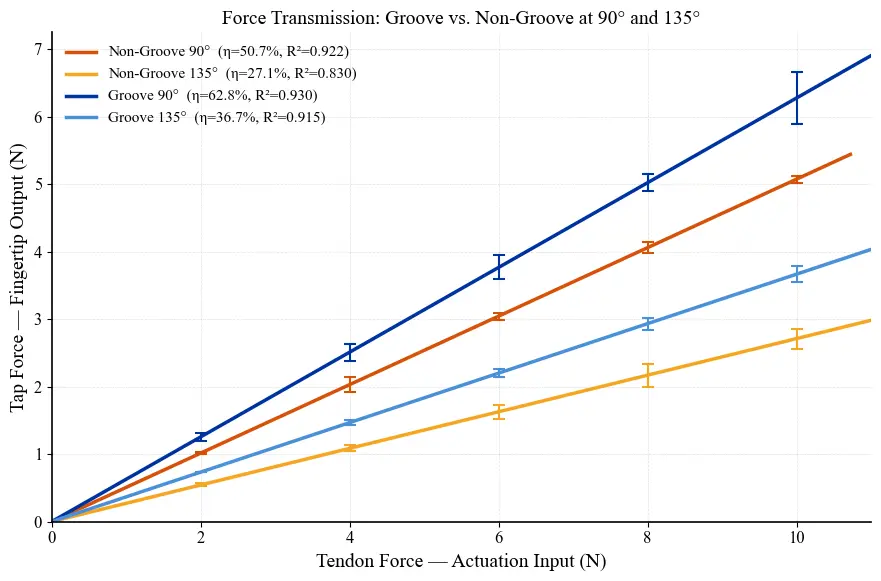
Force transmission — groove vs. non-groove at 90° and 135°
Design & build
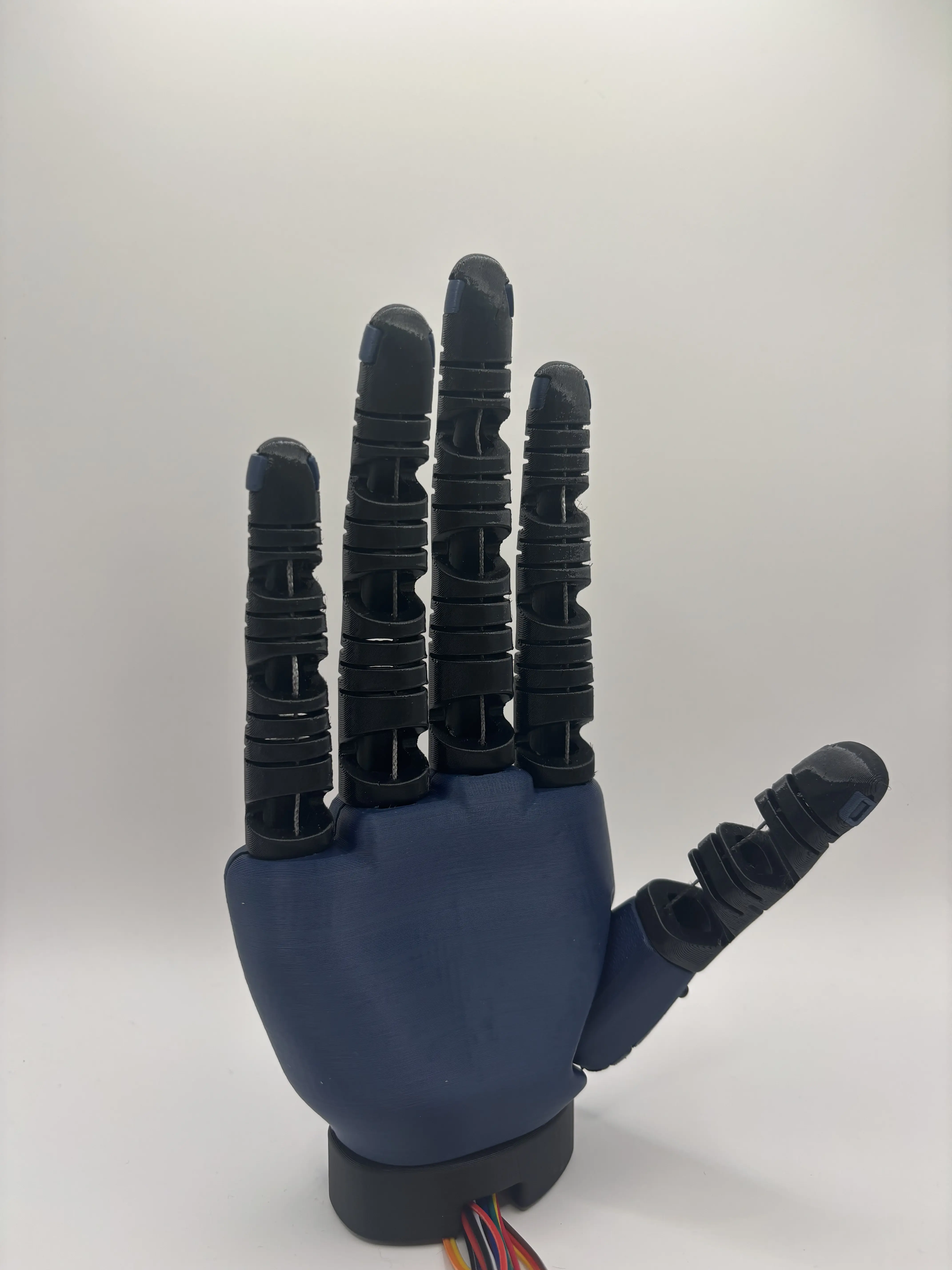
Front view — groove-based TPU fingers
Back view — palm and wrist assembly
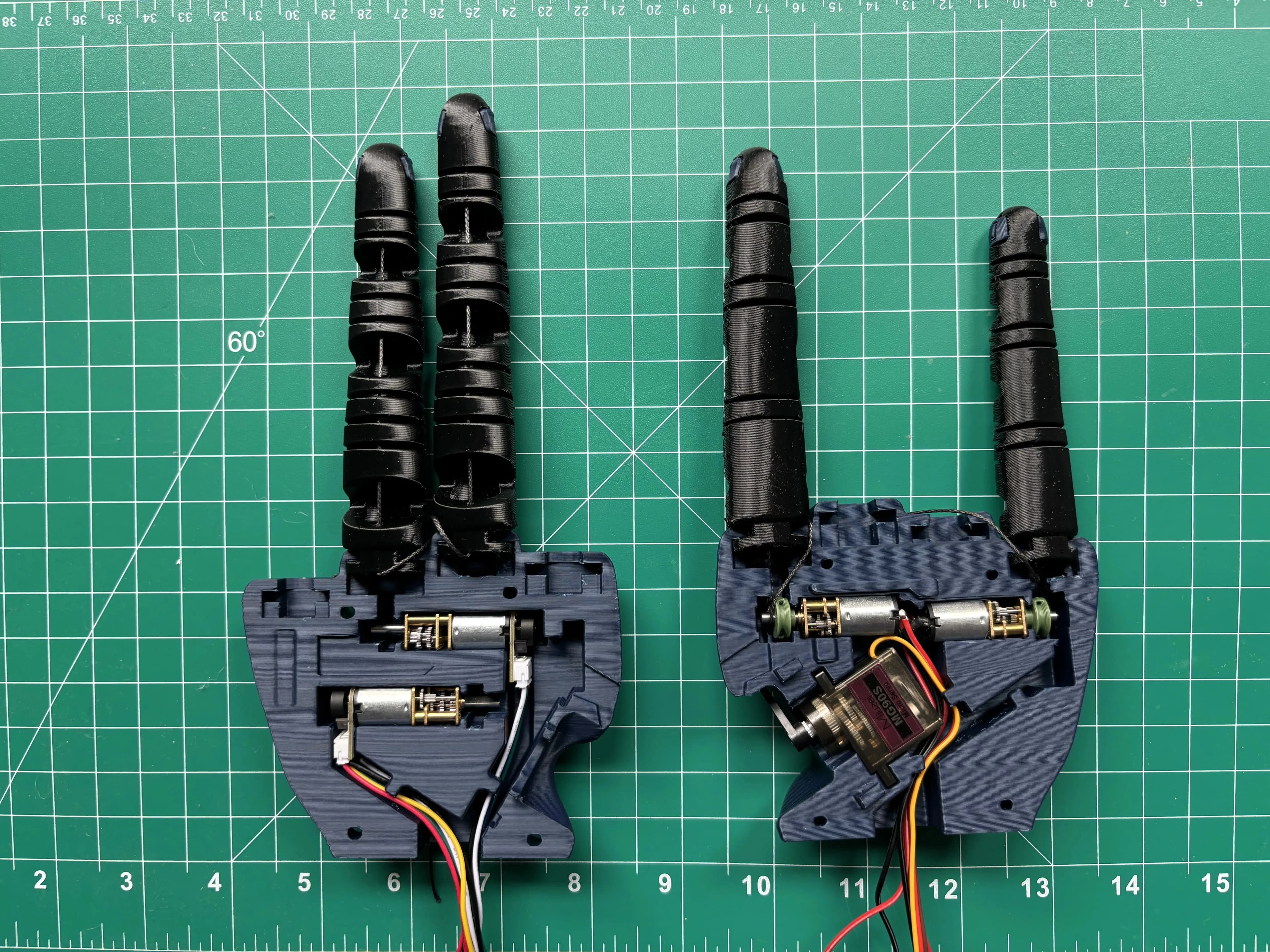
Palm internals — final motor layout (DC motors + servo thumb)
Grasping tests
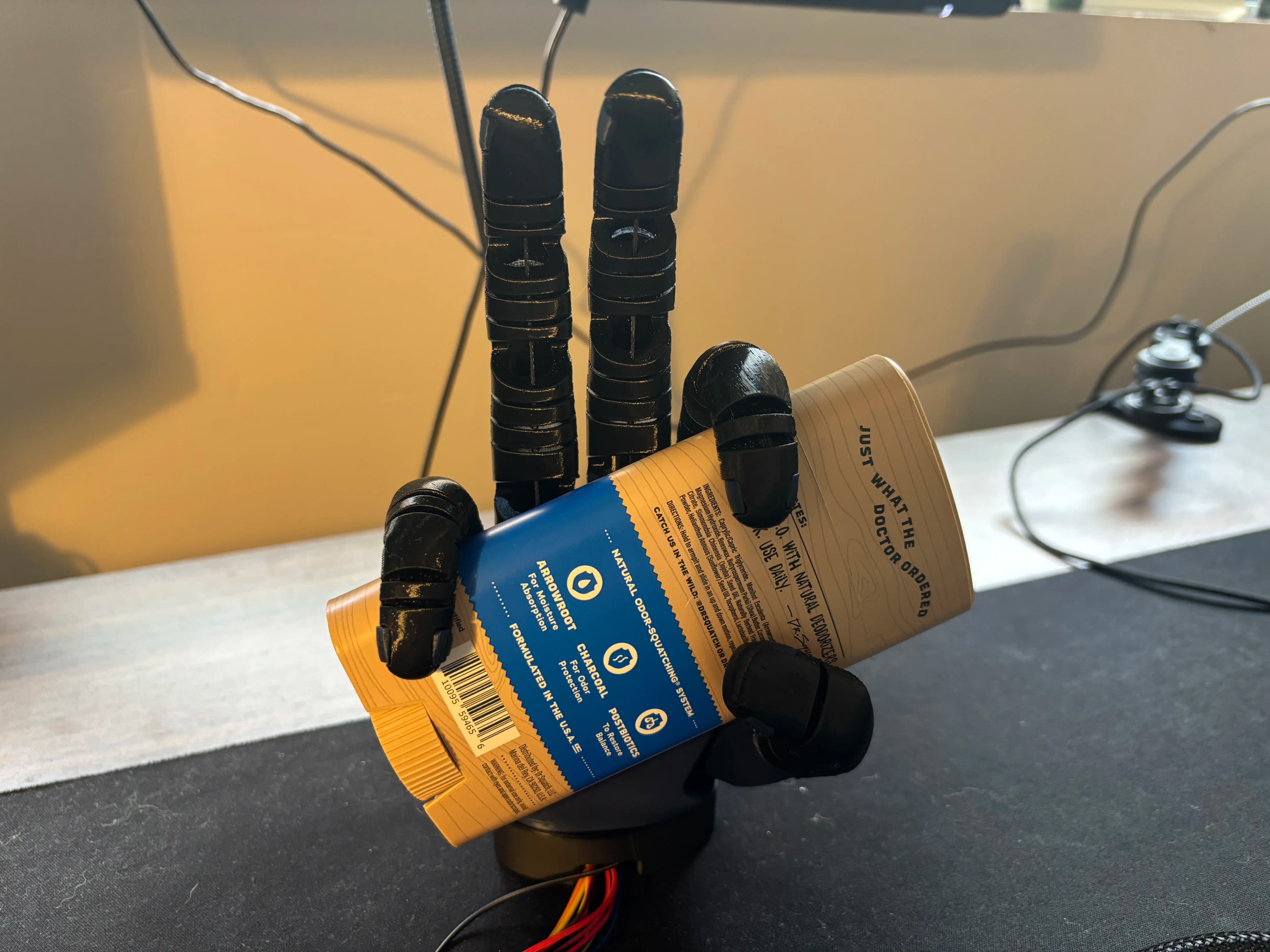
Power grasp — deodorant
Live actuation demo
Electronics & control
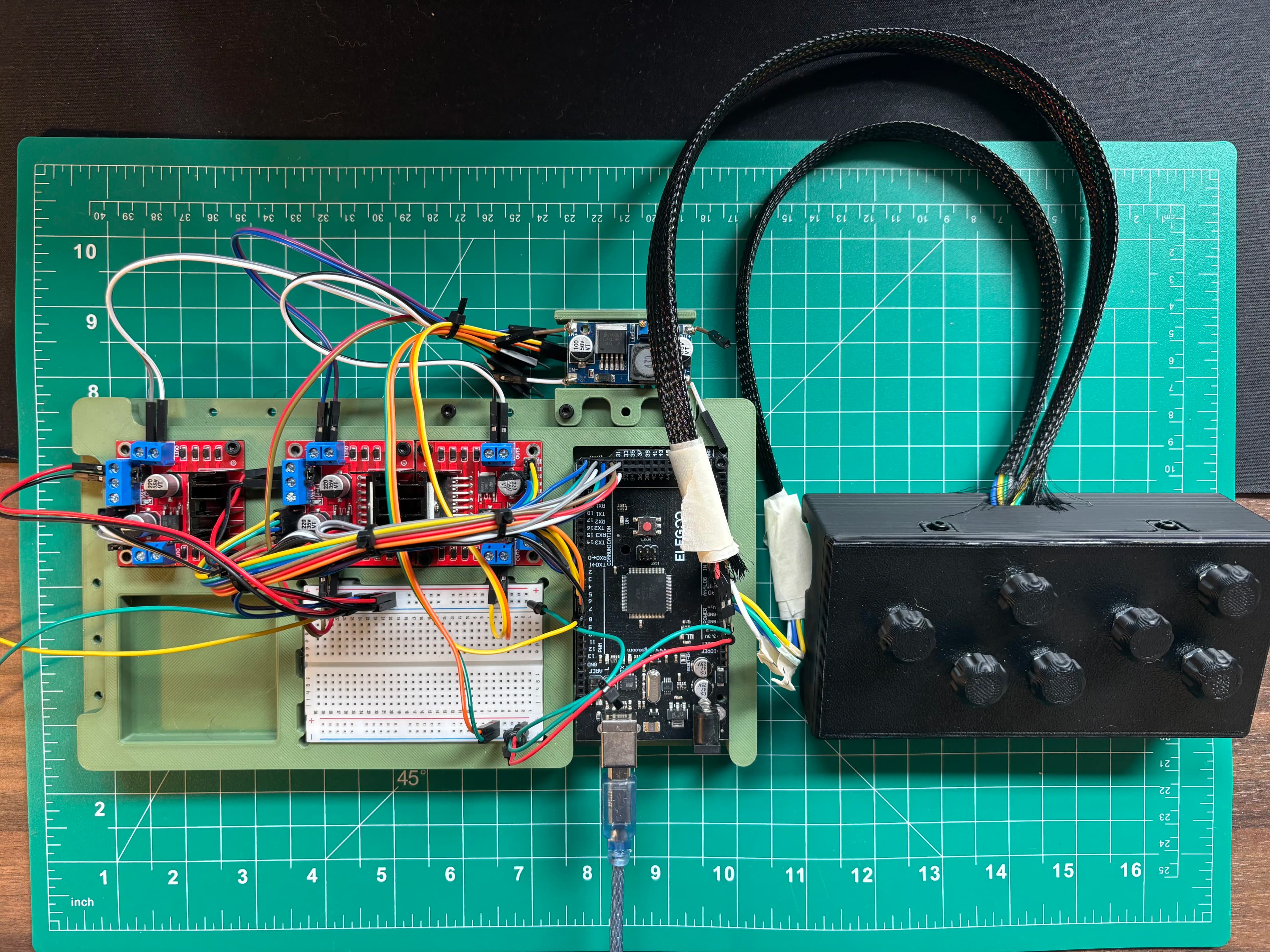
Arduino Uno, L298N motor drivers, DC-DC buck converter, and manual potentiometer control — all mounted on a custom 3D-printed panel
Tools & methods
SolidWorks · ANSYS Mechanical · Prusa XL 5T · Arduino · TPU & PLA · FEA · Response Surface Method · Mooney-Rivlin Hyperelastic Modeling
← All Projects